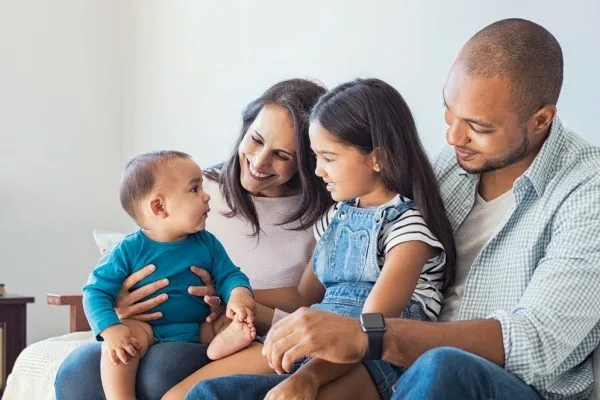
Tips for actively listening to your preschooler
Effective communication shapes your child's personality and future relationships. Active listening is crucial for your child's social and emotional…
Key points:
- Effective communication shapes your child's personality and future relationships.
- Active listening is crucial for your child's social and emotional development.
- Reflective listening helps understand and validate your child's feelings and thoughts.
- Show genuine interest and avoid distractions to encourage your child to express themselves freely.
Because of this, communicating with your child is very important for their social and emotional development. As the American Academy of Pediatrics emphasizes, knowing how to receive the message your child is trying to convey to you is an essential part of the communication. This article will focus on listening actively to your preschooler.
All communication can be thought of as a channel that goes both ways: not only the receiver end of the message is getting something! In every communication, the person speaking also gets an implicit message about what they are saying. This message is conveyed by the listeners body language, attunement, and feedback or lack thereof. When you use active listening, your child gets the message back that what they are saying is important, and that you are receptive to what they are expressing.
Active listening can help your child better understand their feelings, and it fosters a warm and nurturing relationship between the two of you, while also boosting your child’s sense of worth and self-confidence. Here are some recommendations on how to become an active listener with your child:
- Try reflective listening. This is when you listen, summarize, and then repeat back the message your child is giving you. The important thing here is not to just repeat what you’re hearing, but to lend your more advanced socio-emotional skills to your child, so you speak out what they might be thinking or feeling. You can try giving names to a feeling you see in the communication, as an open suggestion, “It seems to me as if you are happy/sad/angry/tired”.
- Set aside distractions and show interest. When your child is telling you a story, try to get yourself free from distractors, like the cellphone or the newspaper, and give your complete attention to your kid. You can show your interest by maintaining eye contact and making facial expressions.
- Encourage your child to keep talking. You can interact with the story, while avoiding interrupting, criticizing, or hurrying them up.