We partnered with researchers from Harvard, Stanford, and MIT to build a parenting app grounded in the latest science on early childhood development — powered by millions of real data points.
Development in the early years works like a Big Bang: it starts unified, then rapidly expands into distinct, interconnected abilities. In the first weeks, everything grows together — physical, cognitive, language, and social-emotional development move as one. Around 12 months, each domain finds its own trajectory.
At 1 month, most babies have mastered ~50 milestones. By 24 months, ~300. That's not gradual progress — that's an explosion of capability, happening daily, in front of your eyes.
We know this because we've measured it. Working with Stanford University, Kinedu analyzed 21,861 children across 177,934 data points — and confirmed what the Big Bang analogy predicts: early development is tightly unified, then becomes beautifully complex.
Harvard Center on the Developing Child
Development isn't just one thing. Babies grow physically, cognitively, linguistically, and socially-emotionally — all at once. These domains are deeply interconnected: each one influences and builds upon the others.
From rolling over to running — gross and fine motor skills that let your baby explore the world.
Problem-solving, curiosity, cause and effect — how children learn to think and understand.
From first coos to full sentences — speech, listening, and early literacy skills.
Bonding, empathy, self-regulation — the emotional skills that last a lifetime.
When a baby babbles, gestures, or cries, and an adult responds with eye contact, words, or a hug — that's called "serve and return." These back-and-forth interactions are the building blocks of brain architecture.
Every activity in Kinedu is designed to create these powerful serve-and-return moments. Our research with Stanford University found that Kinedu activities lead to real increases in parents' verbal and non-verbal engagement with their children.
Harvard CDCH · Stanford University
Traditional milestone checklists ask: "Has your baby done X yet?" Kinedu Skills® asks something different: "How is your baby's whole developmental universe unfolding — and what does that mean for what they're ready to learn next?"
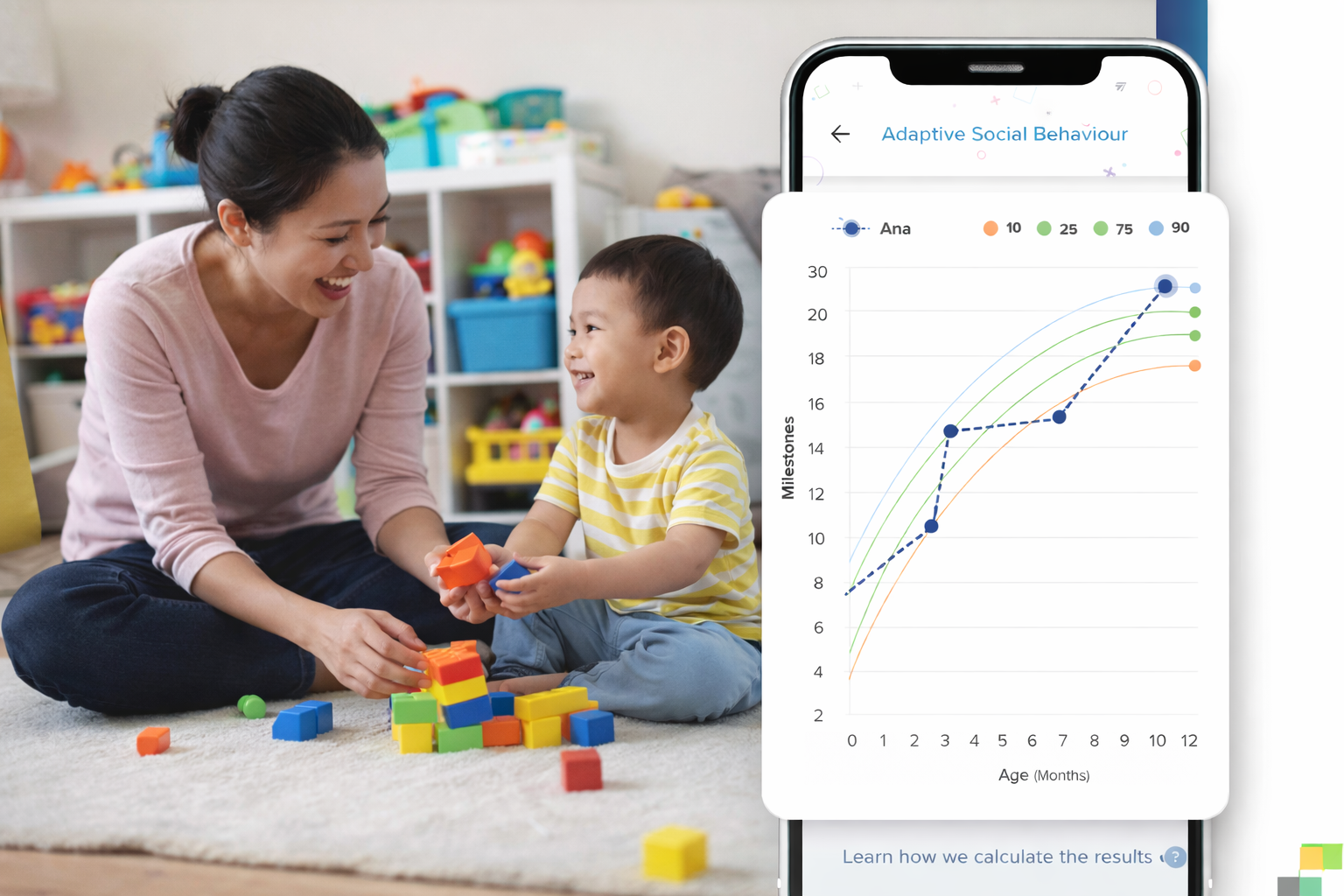
Built with Prof. Michael Frank at Stanford after analyzing millions of milestone observations, Kinedu Skills® maps 414 milestones across 46 skills — and shows you not just where your baby is, but where the science suggests they're headed.
Unlike a checklist, it captures that development is multi-dimensional — not a single "developmental level." It's interdependent — progress in one area unlocks others. And it's continuous — always moving, never just pass/fail.
Development doesn't follow a single timeline. Kinedu understands this — and adapts to your child.
At certain windows of time, children are especially ready to learn specific skills. Toddlers are primed for a language explosion around age 2, and preschoolers are eager to socialize.
Kinedu targets these windows so you never miss themOne child might walk at 10 months, another at 15 — and both are perfectly healthy. Development has a wide range of normal.
Kinedu adapts to your child's unique paceCenter on the Developing Child — the science of brain architecture, toxic stress, and serve-and-return interactions.
Prof. Michael Frank — the Structure of Development research and activity effectiveness studies.
Supporting the Kinedu Skills® Milestone Model — a new approach to tracking early childhood development.
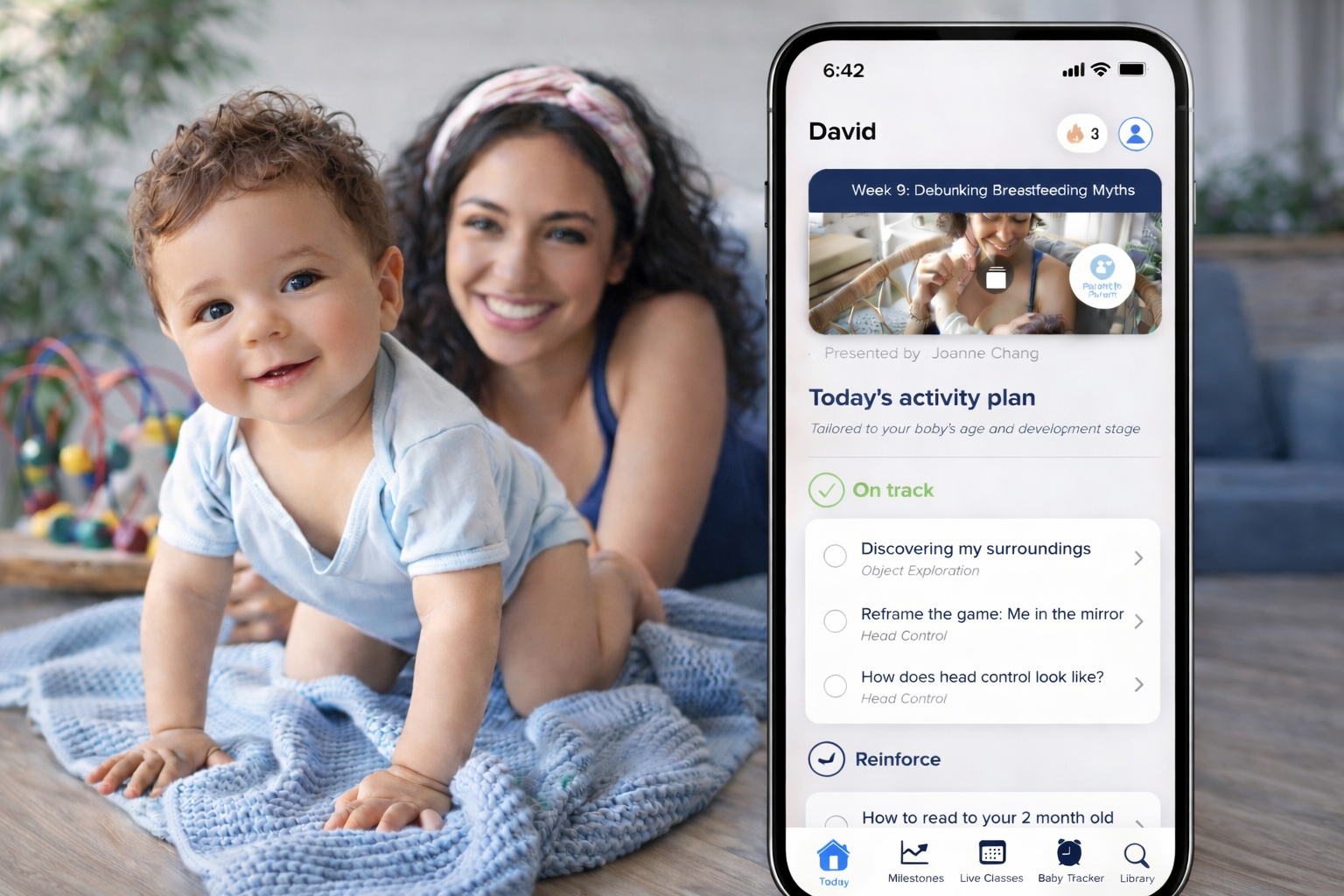
Your love and everyday interactions spark your baby's growth. Kinedu's research-powered algorithm uses millions of data points to create a daily plan unique to your baby — challenging enough to build new skills, smart enough to reinforce what they've learned, and fun enough that you'll both look forward to it.
Everything in Kinedu is built on real research. See the difference it makes.
Start your free trial