How Does Your Baby's Vision Develop?
Your baby can barely see at birth — but their visual system develops at a breathtaking pace in the first year.
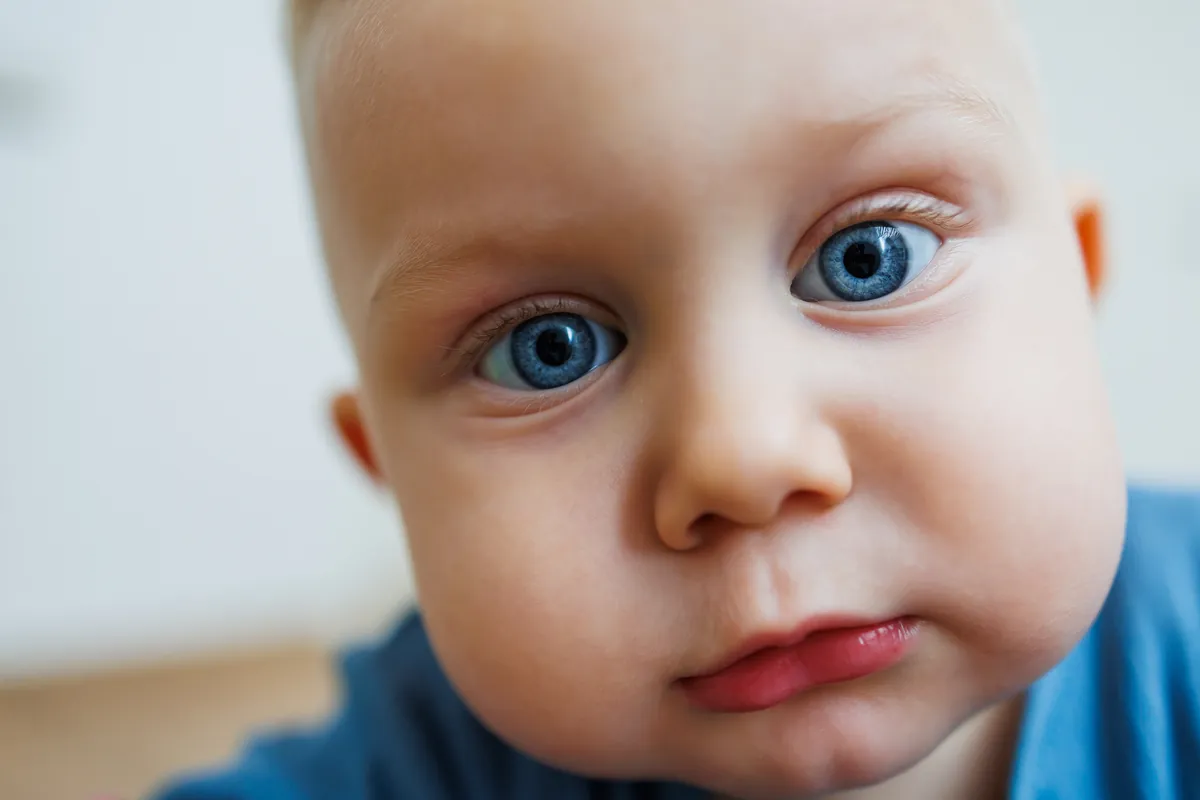
Your baby’s eyes are constantly changing during their first year of life from their birth until they are able to clearly distinguish colors and faces just like you do! You might be wondering: when can my baby actually see color? or will their eye color stay the same as it is now? In this article we’ll cover the most frequently asked questions regarding visual development.
What does my baby see in the first few weeks?
In the first few weeks of life, your baby’s vision is limited. When they are born babies can only focus on objects about 8-12 inches away: the perfect distance for looking at you during feedings. They mostly see in black, white, and shades of gray because the cells in their retina (called cones) that detect color are still developing.
When will my baby see color?
By the time babies are around 8 weeks old, they start to see colors, but at this stage, they can only differentiate between high-contrast colors like black, white, red, green and yellow. It's not until about 4 to 5 months that babies will be able to see a full range of colors and begin to develop the ability to distinguish between lighter shades of color.
You might notice your baby staring at brightly colored toys or objects with high contrast as these are easier for them to see and hold their attention longer. Incorporating toys with bright colors, especially red and blue, can stimulate their visual development. Try this activity to enhance your baby's visual development as they reach for and explore toys!
When do babies’ eyes change color?
It’s common for newborns to have grayish-blue eyes at birth, but this color may not be permanent. The final color of your baby’s eyes depends on the amount of melanin (a protein that gives color to our skin, hair, and eyes) in their iris. The more melanin, the darker the eye color.\u00a0
Most babies' eyes start changing between 6 to 12 months, but the process can continue for up until they’re around 3 years old. If your baby’s eyes are going to darken, it will usually happen gradually over the first year of life, shifting from blue or gray to hazel, green, or brown as melanin increases. However, babies born with dark brown eyes typically keep their color from birth.
What other visual milestones should I expect?
- 3 to 4 months: Your baby starts tracking moving objects with their eyes and recognizing familiar faces from a distance. Stimulate this milestone through this activity.\u00a0
- 5 to 7 months: Depth perception improves, and babies begin to see the world in three dimensions. This is also the age when hand-eye coordination improves, which is why you might see them reaching out to grab toys with more precision.
- 8 to 12 months: Babies can now see as clearly as adults. They can follow fast-moving objects, recognize people across the room, and even point to things they want.
When should I contact a professional?
If you notice anything unusual about your baby’s eyes, such as constant eye crossing, lack of eye contact by 3 months, or one eye drifting more than the other, it’s a good idea to check in with your pediatrician.
In Conclusion..
Your baby’s vision evolves from seeing in black and white to a vibrant world full of color by their first year as their eye color finds its unique shade as well! Each day brings new milestones—watch for those exciting changes!