Oral phase in babies: why they put everything in their mouth and when it ends
Mouthing is how babies explore before their hands can. Here is what the oral phase is for, how long it usually lasts and how to keep it safe.
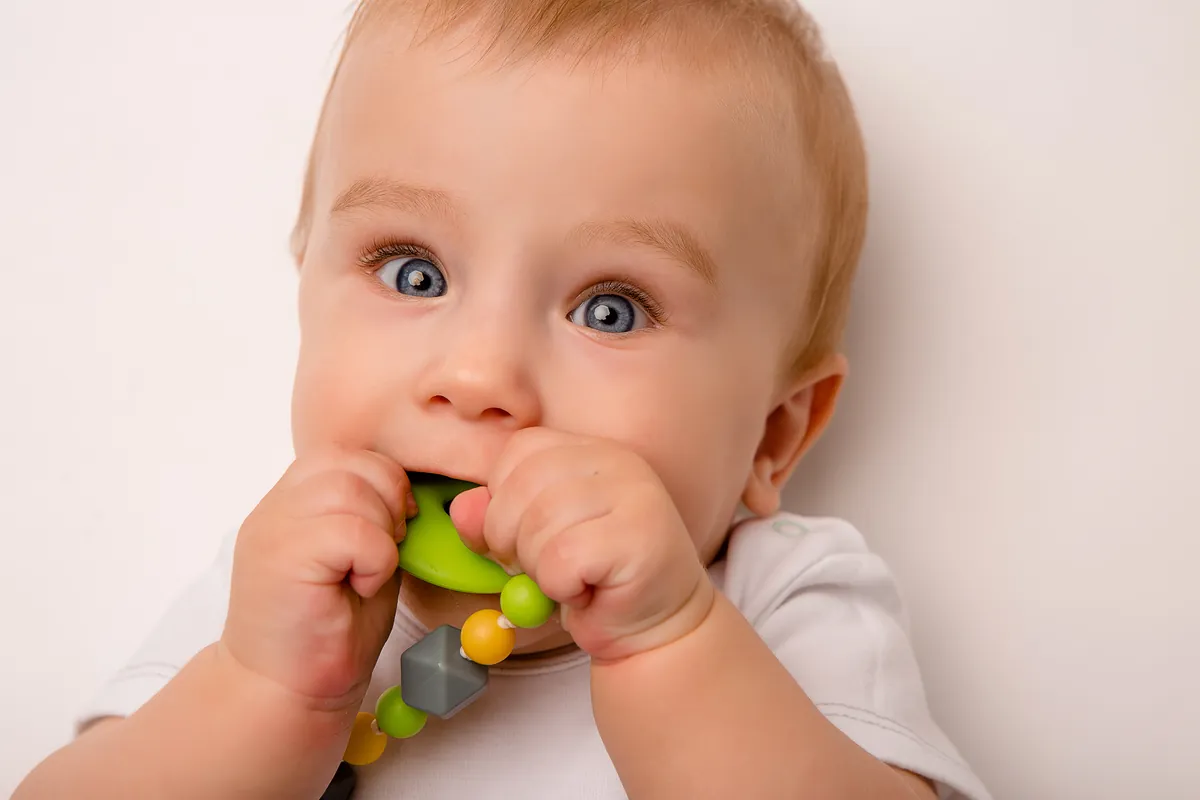
Your baby grabs a toy, a sock or the corner of a blanket, and it goes straight to their mouth. This is the oral phase of development, also called mouthing, and it is one of the first ways babies learn about the world. Here is what it is for, when it starts and ends, and how to keep it safe.
Why do babies put everything in their mouth?
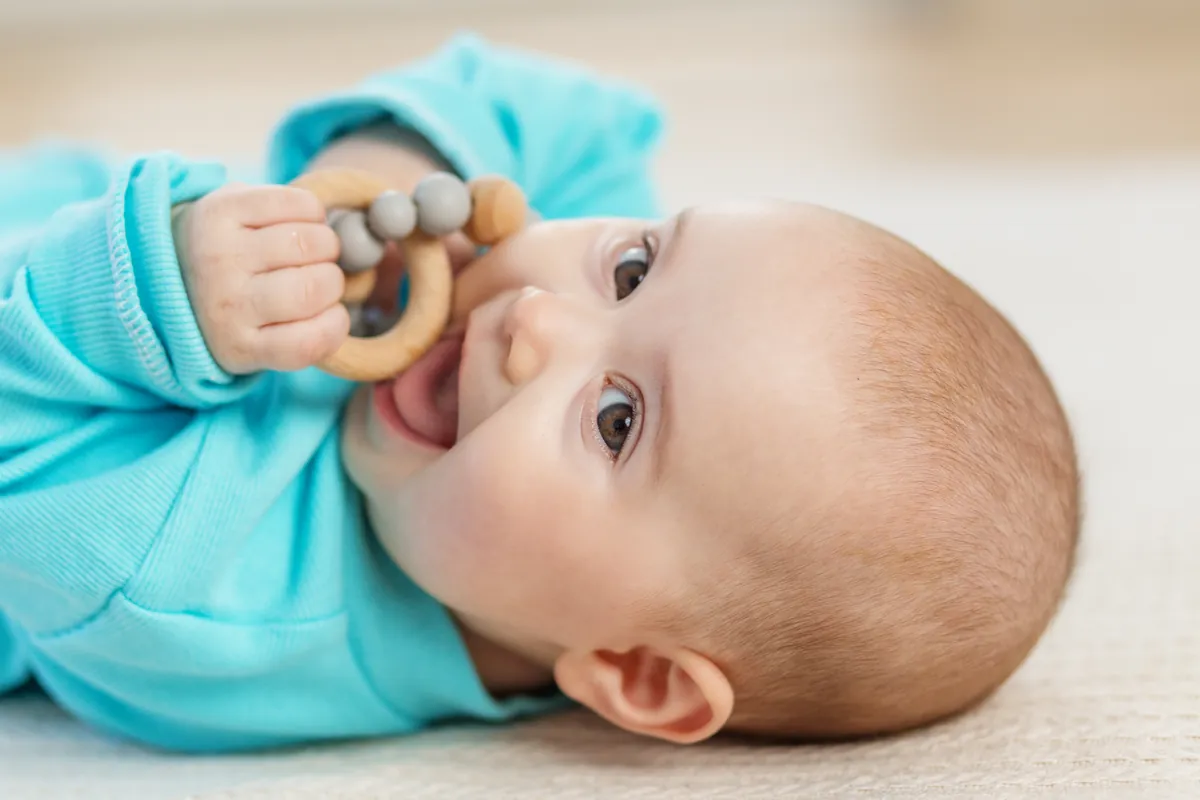
Because the mouth is the first tool babies have to explore. In the first months, lips and tongue have far more nerve endings than fingertips, so a baby learns whether something is soft, hard, cold or rough by mouthing it. Mouthing also calms them, trains the jaw, tongue and lips for solid food and first sounds, and helps them tell what is food and what is not. It is expected behavior from about 3 months to about 18 months. Your job is not to stop it but to make sure that what reaches the mouth is safe.
What is the oral phase of development?
The oral phase, or oral stage, is the period when babies explore mainly through the mouth. Before they can use their hands with precision, sucking, licking and biting give them the most information about an object. Teethers, pacifiers, fingers, the TV remote, the fluff on the carpet and the piece of food that fell on the floor all end up in the mouth.
As unhygienic as it sounds, this is part of typical development, not a bad habit. Pediatric and developmental guidance describes mouthing as an expected step in sensory and motor development, and the behavior fades on its own as hands and eyes take over.
One clarification, because the term causes confusion: in psychology, "oral phase" also names the first stage of Freud's theory of psychosexual development. This article is about the everyday behavior you see in your baby, not about that theory.
What mouthing does for your baby
- Exploring textures and temperature. The mouth tells a baby whether an object is smooth or bumpy, warm or cold, soft or hard, while their hand coordination is still developing.
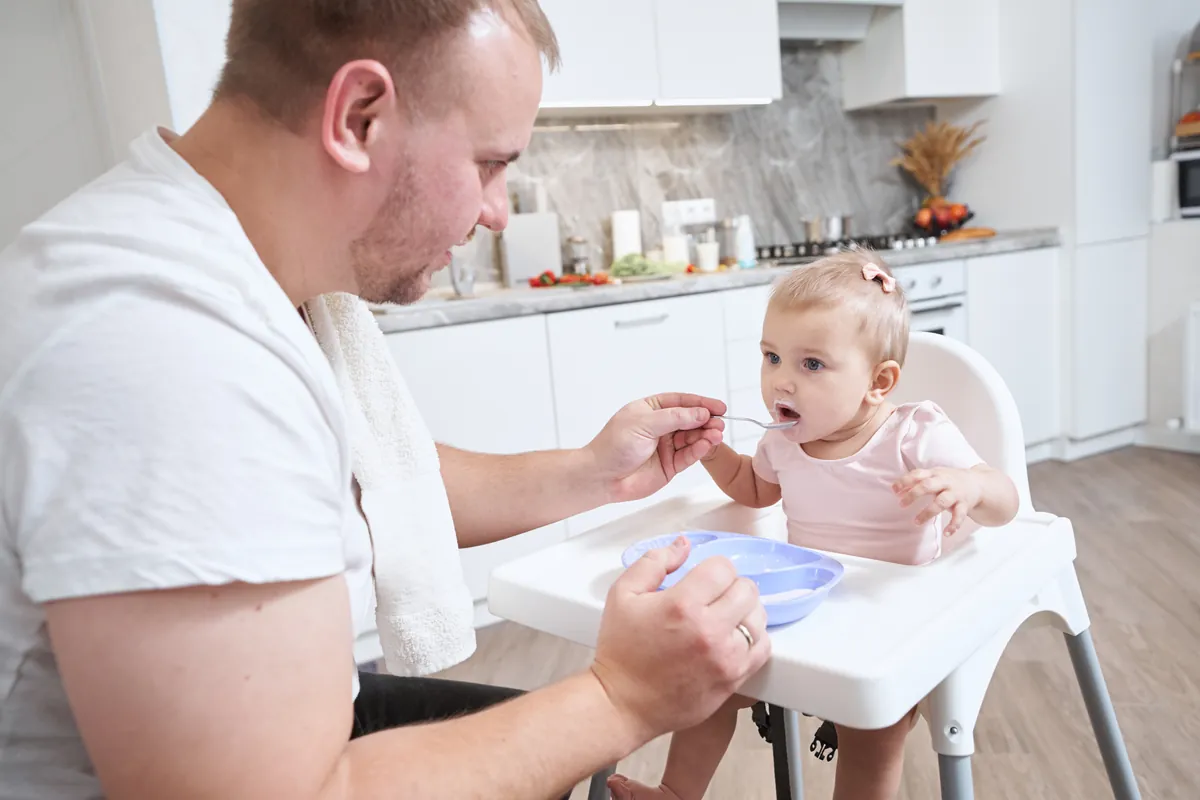
- Learning taste and getting ready for solids. Mouthing lets babies sort what is edible from what is not, and gets the mouth used to new textures before the introduction of solid foods.
- Training the mouth muscles. Sucking and biting coordinate the jaw, tongue, cheeks and lips, the same muscles used later for chewing and for first sounds and words.
- Self-soothing. Sucking a thumb or a pacifier helps babies settle when they are sleepy, hungry or overwhelmed.
- Meeting everyday germs. Contact with the ordinary germs of a clean home is part of how the immune system learns. Dust does not make babies sick; viruses and bacteria passed on by people who are sick do. More on hygiene below.
When does the oral phase start and end? Age by age
There is no exact calendar, and every baby has their own pace, but this is the usual sequence:
| Age | What you usually see |
|---|---|
| Before birth | Thumb sucking can already show on an ultrasound. |
| 0 to 3 months | Sucking reflex. Hands find the mouth by chance at first, then on purpose. |
| 3 to 5 months | Baby reaches, grabs and brings objects to the mouth. Mouthing begins in earnest. |
| 6 to 12 months | Peak of the oral phase. Everything within reach gets tasted. Teething often overlaps. |
| 12 to 18 months | Hands and eyes take over exploration. Mouthing fades. |
| 18 to 24 months and beyond | Occasional, mostly for comfort, when tired or when a new tooth is coming. |
Most babies mouth less and less after their first birthday, and the behavior usually fades around 18 months. Some toddlers keep it longer, especially when teething, tired or stressed, and that is still within the usual range. Be patient: each child learns at their own pace what can and cannot be explored with the mouth.
Mouthing or teething? How to tell the difference
Mouthing alone is not a sign of teething. Many babies start mouthing at 3 or 4 months and do not get a first tooth until 6 months or later, sometimes closer to a year. What points to teething is the combination: a lot more drool than usual, red or swollen gums, rubbing the gums with fingers or toys, irritability and lighter sleep. You can check the full list in the first signs of teething and when babies usually start teething.
If the gums look sore, a clean teether chilled in the fridge (not frozen) or a gentle massage with a clean finger gives safe relief. Teething gels and necklaces are not recommended; ask your pediatrician before using any remedy.
How to keep the oral phase safe
Choking
Babies have a strong gag reflex that pushes out most objects that go too far back, but it is not enough on its own. Keep small parts away: buttons, beads, coins, toy eyes, bottle caps and anything that fits through a toilet paper roll is a choking hazard. Avoid foods that block the airway easily, such as whole grapes, nuts, popcorn, hot dogs, hard candy and raw hard fruit or vegetables. If your baby is mobile, babyproof the house at floor level, where their eyes and hands are.
Germs
Wash toys often, do not share toys with children who are sick, and rinse the pacifier when it falls. A pacifier that landed on your own kitchen floor is not an emergency; a toy handled by a child with a cold is more likely to pass something on. Frequent hand washing, yours and the baby's, is the habit that helps the most.
Dangerous products
Babies do not know what is dangerous. Keep cleaning products, medicines, vitamins, cosmetics, nail polish, alcohol and houseplants out of reach and ideally locked. Two items deserve special attention because they look harmless and can cause serious injury if swallowed: button batteries (in remotes, key fobs, toys and greeting cards) and small magnets. Check that battery compartments are screwed shut.
Outdoors
Sand, dirt and grass are part of playing outside and a small taste is usually harmless. What matters is what hides in them: pebbles, litter, cigarette butts and animal waste. Choose clean spots, sit close and check the ground before you set the baby down.
What to do if your baby swallows something or eats sand
Stay calm and look at your baby first, not at the object.
- Baby is coughing, crying or breathing fine. The airway is open. Do not sweep the mouth with a finger without seeing the object, because that can push it deeper. Let them cough and watch closely.
- Baby cannot cough, cry or breathe, or is turning blue. Call emergency services right away and start first aid for choking in infants: back blows and chest thrusts.
- Swallowed a button battery, a magnet, a medicine, a cleaning product or a plant. Call emergency services or your local poison control line immediately, even if your baby seems fine. Do not make them vomit.
- Ate a little sand, dirt or grass. It usually passes on its own. Wipe out the mouth, offer water or a feed, and watch for vomiting, belly pain or refusing to eat over the next day. Call your pediatrician if any of that appears or if you are unsure.
- Swallowed a small, smooth object such as a coin. Call your pediatrician the same day for instructions. Here is what to watch for while you wait.
Knowing the steps before you need them is what makes the difference. In the Kinedu First Aid masterclass, a Kinedu specialist shows infant choking first aid step by step, so you can practice calmly at home.
Safe sensory play during the oral phase
Rather than fighting mouthing, feed it with things that are safe to taste:
- Silicone or natural rubber teethers in different shapes.
- Clean cloths with different textures, such as terry, satin or knit.
- Unfinished wooden rings or blocks too big to fit in the mouth.
- A washcloth chilled in the fridge, never frozen.
- Soft fruit in a mesh feeder once you have started solids, with your pediatrician's go-ahead.
Rotate textures, sit with your baby and name what they are feeling: cold, soft, bumpy. You will find more ideas in these sensory activities for babies. In the Kinedu app, each day's activities are matched to your baby's exact age, including safe sensory play for the oral phase.
When to mention it to your pediatrician
Mouthing itself does not need a visit. Bring it up at a regular checkup if your child is past 2 and still mouths most objects most of the day, if by around 6 months your baby does not bring hands or toys to the mouth at all, if mouthing comes with frequent gagging or trouble with solids, or if anything just does not feel right to you. These are things to observe and ask about, not signs of a problem on their own.
Frequently asked questions about the oral phase
Why do babies put everything in their mouth?
Because the mouth is their first and most sensitive tool for exploring. Lips and tongue tell a baby whether something is soft, hard, cold or rough long before their fingers can. Mouthing also calms them and trains the jaw, tongue and lips for solid food and first sounds.
When do babies stop putting everything in their mouth?
Mouthing usually peaks between 6 and 12 months and fades as hands and eyes take over exploration. Most children mouth much less by around 18 months, and only occasionally after age 2, mostly for comfort or when teething or tired. Every child has their own pace.
Is mouthing a sign of teething?
Not on its own. Many babies start mouthing at 3 or 4 months and do not get a first tooth until 6 months or later. Teething usually shows as a combination: lots of drool, red or swollen gums, gum rubbing and irritability, on top of the mouthing.
Should I stop my baby from mouthing?
No. Mouthing is part of typical development and trying to stop it gets in the way of learning. The useful job for parents is to control what reaches the mouth: keep small parts, batteries, magnets, medicines and cleaning products out of reach, and offer safe things to mouth instead.
What should I do if my baby ate sand or dirt?
A small amount of sand or dirt usually passes on its own. Wipe out the mouth, offer water or a feed, and watch for vomiting, belly pain or refusing to eat over the next day. Call your pediatrician if any of that appears, if there may have been pebbles, litter or animal waste in the sand, or whenever you are unsure.
Is it a problem if my 1-year-old still puts everything in their mouth?
At 12 months this is still expected. Mouthing fades gradually over the second year rather than stopping on a date. If your child is past 2 and still mouths most objects most of the day, mention it at a regular checkup. That is something to observe and ask about, not a sign of a problem on its own.
Is the oral phase the same as Freud's oral stage?
They share a name but not a meaning. In psychology, the oral stage is the first stage of Freud's theory of psychosexual development. The oral phase described here is the everyday sensory behavior pediatric and developmental guidance describes: babies exploring the world with their mouths.